



NCA Compliance in Saudi Arabia – What Businesses Must Know
In the rise of Saudi Vision 2030, the Kingdom is quickly expanding into a digital-first economy. However, as the technical footprint of the Kingdom grows, so do the hazards. To protect national protection and the economy, the National Cybersecurity Authority was formed.
For businessmen, NCA compliance in Saudi Arabia is no longer an option; it is a compulsory legal demand that dictates how your corporation manages data, protects its network, and responds to threats.
Table of Contents
What is NCA Compliance?
The NCA KSA is the central authority in charge of cybersecurity in the Kingdom. Its main objective is to secure the state’s crucial interests and crucial national infrastructure.
NCA Compliance refers to the compliance with particular structures released by the authority, most notably the Essential Cybersecurity Controls. These controls are developed to establish a minimum baseline for cybersecurity in all national companies. Whether you’re a government entity or a private corporation, you should prove that your IT infrastructure solutions Saudi Arabia fulfill these stringent norms to run legally.


Key Frameworks Every Business Should Know
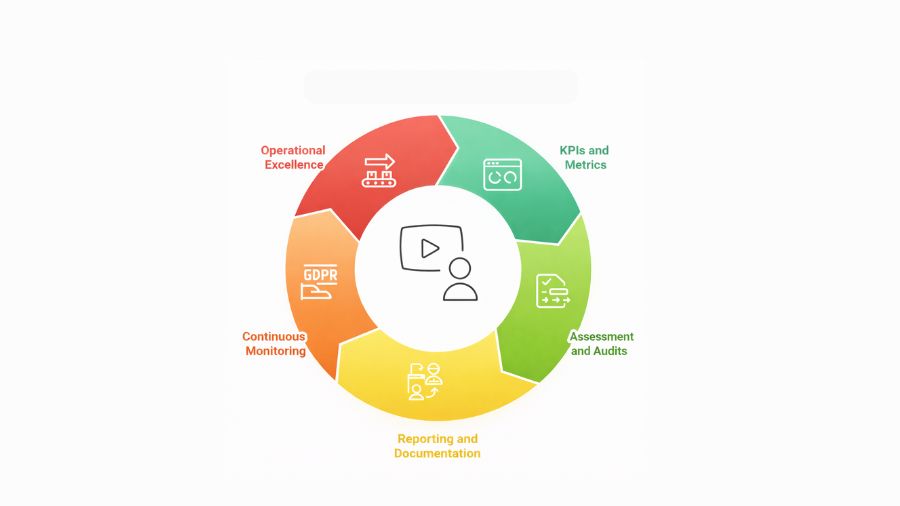
Gaining NCA compliance in Saudi Arabia is crucial for securing your business and following the law. To make it easy to understand, the National Cybersecurity Authority utilizes particular structures or rulebooks.
1. The Foundation – Essential Cybersecurity Controls
The ECC is the main rulebook that establishes the minimum protection level for companies in Saudi Arabia. Consider it a safety inspection for your technical business.
It is constructed on 5 Main Domains –
- Cybersecurity Governance – This is about management and planning. It demands that you have clear protection guidelines, a risk management scheme, and a group in charge of protection. It makes sure your leaders are actually considering cyber threats.
- Cybersecurity Protection – This is the digital part. It comprises utilizing robust passwords, securing your network with firewalls, keeping your software updated, and making sure you have an inventory of every laptop and server you own.
- Cybersecurity Resilience – This industry asks, what occurs if we do get hacked? It demands that you have a disaster recovery plan and routine data backups so your business can get back to work rapidly after an incident.
- Third-Party & Cloud Security – Most companies utilize external vendors or cloud services. This industry makes sure that your partners are only as protected as you are, so a leak at their corporation does not hurt yours.
- Industrial Controls Systems – This only applies to corporations that operate physical machinery, like factories, water plants, or oil refineries. It pays attention to securing the specialized computers that control hefty tools.
2. New 2026 Rules for the Private Industry
In the past, these rules were mostly for government offices. Now, as part of Saudi Vision 2030, the NCA has made two classes for private corporations to make sure everybody is secured depending on their size.
- Class A – Large Entities – If your corporation has over 250 employees OR earns over SAR 200 million a year, you are in Class A. You are needed to have independent, expert audits to prove you are following every rule ideally.
- Class B – SMEs – If your company has between 6 and 249 workers and earns between SAR 3 million and SAR 200 million, you’re in class B. The NCA has built this simpler for you. You only need to follow about 26 compulsory controls. The concentration for Class B is on the basics that prevent 90% of attacks: robust passwords, employee training, and backup protection.
The Consequences of Non-Compliance

The NCA has been issued remarkable enforcement powers. If your business fails to fulfill NCA compliance norms, the hazards include –
1. Heavy Fines – Financial fines can reach up to SAR 25,000,000.
2. License Suspension – Temporary or permanent suspension of your business license.
3. Reputational Damage – The NCA has the right to publicly reveal violations at the company’s cost.
4. Contractual Loss – Several government and big company agreements now demand evidence of NCA adherence before you can even bid.
How to Achieve NCA Compliance – A Step-by-Step Guide

Gaining adherence is not about purchasing a single part of software; it is about building a cyber security solution in Saudi Arabia that covers strategy, people, and technology.
1. Gap Analysis – Before you change anything, you should comprehend where you stand. An expert IT services company in Saudi Arabia will conduct a gap Analysis to compare your current formation against the ECC demands.
2. Strengthening IT Infrastructure – Your IT infrastructure solutions Saudi Arabia should be hardened.
This includes –
- Identity and Access Management – Executing Multi-Factor Authentication for all remote and manager logins.
- Network Security – Deploying firewalls and intrusion detection systems to supervise traffic 24/7.
- Asset Management – Sustaining a real-time inventory of every laptop, server, and software license your corporation owns.
3. Governance and Training
NCA compliance demands paperwork. You should have written guidelines for everything from password modifications to what occurs during a fire. Additionally, you should train your employees on Cybersecurity best practices, like spotting phishing emails.
Why Managed IT Services are the Best Path to Compliance

Most companies don’t have the internal specialization to handle 114 distinct security controls while also operating their regular functions. This is where managed IT services in Saudi Arabia come in.
By connecting with Bluechip Tech, you receive –
1. 24/7 Monitoring – Automated tools that notify you of threats before they become breaches.
2. Audit Readiness – We sustain the logs and paperwork needed to pass an NCA verification at any time.
3. Expert Support – Access to IT support solutions in Saudi Arabia given by professionals who comprehend the local Saudi legal landscape.
Conclusion
NCA compliance in Saudi Arabia is the basis of an advanced, protected business. While the rules may sound complicated, they are developed to protect you from the devastating expenses of cybercrime.
With the appropriate Cyber security solution in Saudi Arabia, adherence becomes a competitive benefit instead of a burden.
Also Read: 24/7 IT Monitoring – Why Saudi Businesses Need Proactive IT Support


