




CMS Development & Content Management Solutions in Saudi Arabia
Manage your website content without relying on a developer for every routine update. Bluechip Advanced Technologies helps businesses in Riyadh evaluate CMS platforms, plan website structures and implement manageable content workflows. The right setup depends on your publishing needs, security requirements, integrations and the people who will maintain the site.
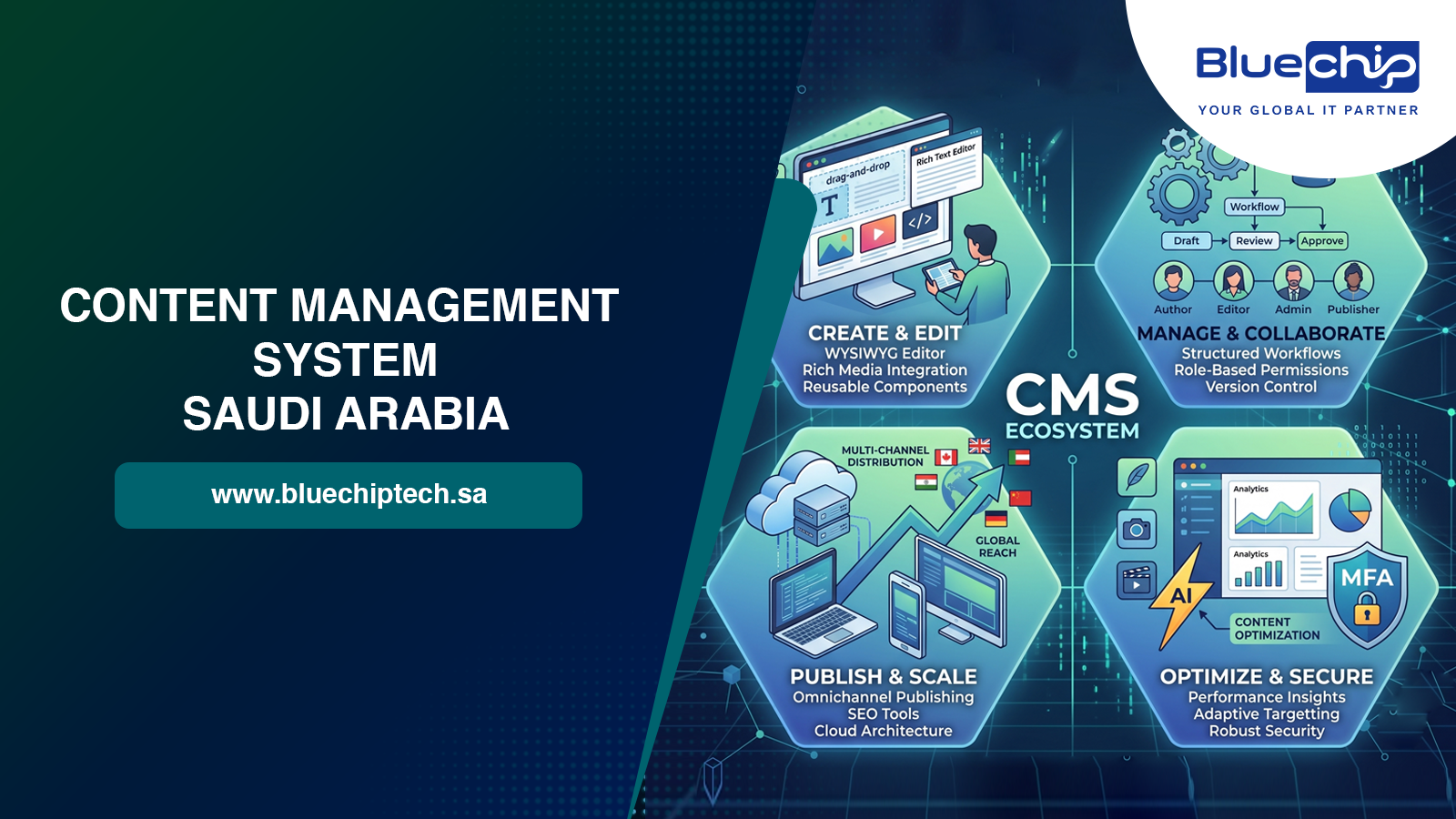
A content management system is software that lets authorized users create, edit, organize and publish website content. For a business website, it can manage service pages, news, images, landing pages and multilingual content through a structured editorial interface. CMS requirements differ from social media scheduling: website governance, page templates, permissions, search visibility and maintenance all matter.
• Role-based access so editors, reviewers and administrators have appropriate permissions.
• Reusable page templates for consistent layouts across services and locations.
• Editorial review and publishing controls to reduce accidental changes.
• Search-friendly URLs, metadata and redirects for important pages.
• Media management with clear file naming and accessible alternatives.
• Backup, update and security practices appropriate to the chosen platform.
Choose the platform around the website, not the other way around. WordPress may suit marketing-led websites needing flexible publishing. Joomla may fit teams with more structured access and content needs. A custom or headless CMS may be worth evaluating when content must serve multiple digital channels or connect with internal applications. The final recommendation should consider licensing, hosting, editorial usability, integration effort and long-term maintenance.
A CMS is useful only when staff can keep information accurate and the website remains maintainable. Before choosing a platform, define who publishes content, which languages are needed, what must connect to existing systems and how updates will be tested. Bluechip Advanced Technologies can discuss these requirements with your team and help outline a practical CMS project scope.
HAVE A PROJECT IN MIND?
What a Business CMS Project Can Include
define content types, navigation, editor responsibilities and approval needs.
Platform configuration: set up page templates, media libraries and user access.
Content migration: inventory existing URLs, map redirects and check migrated pages.
Integrations: assess contact forms, analytics, CRM connections and external services.
Operational handover: document publishing steps, backup ownership and maintenance responsibilities.
A Practical CMS Implementation Approach
1. Discovery: review the existing website, publishing tasks and technical constraints.
2. Design and configuration: agree templates, permissions, languages and integrations.
3. Migration and testing: check content, forms, redirects, mobile layouts and access controls.
4. Handover: train designated editors and define ongoing maintenance responsibilities.
What Should You Check Before Selecting a CMS?
Consider the editing experience, Arabic and English publishing needs, security updates, hosting options, integration requirements and long-term ownership. Ask how easily your team can export content, manage permissions and change vendors. A platform with many features is not automatically the right fit for a simpler corporate website.
Plan Your CMS Around Real Business Workflows
Start with the content your team publishes most often, the approvals it needs and the systems it must connect to. A well-scoped CMS project makes these requirements explicit before development begins. Discuss your website goals, existing platform and support expectations with Bluechip Advanced Technologies to establish an appropriate implementation plan.
Frequently Asked Questions
What is a CMS for a business website?
A CMS is software used to create, edit and publish website content through an administrative interface. The exact capabilities depend on the platform and configuration.
Can our existing website move to a new CMS?
Often yes, but migration should begin with a content and URL inventory. Templates, media, forms, metadata and redirects need testing before launch.
Can a CMS support Arabic and English content?
Many platforms support multilingual websites through built-in capabilities, extensions or custom configuration. Language workflows and right-to-left presentation should be tested.
Do we need WordPress or a custom CMS?
WordPress can work well for many business sites. Custom or headless systems may suit more specialized integrations and content delivery requirements; compare ongoing cost and maintainability.
Can employees update content without coding?
Editors can usually update approved page types without coding after templates and permissions are configured. Advanced layout or functional changes may still require developer support.
What security measures matter for a CMS?
Prioritize controlled administrator access, timely software updates, tested backups, secure hosting and a defined process for reviewing extensions and user permissions.
How long does a CMS implementation take?
Timing depends on website size, design complexity, content migration, languages, integrations and approval cycles. A scope review is needed before estimating a schedule.


