



They search for programs, compare institutions, check admission requirements, revisit faculty pages and switch between Arabic and English as they narrow their options. If important academic pages are difficult for Google to interpret or for students to navigate, visibility can be lost at several points in that journey. Bluechip Advanced Technologies provides university SEO services in Saudi Arabia focused on program discovery, technical quality and search intent. For institutions targeting Riyadh and the wider Saudi market, the work can include bilingual search planning, site architecture, admissions content, structured data, mobile performance and indexation controls – all aligned around helping the right prospective students find useful, accurate information.
SEO Built Around How Students Search in Saudi Arabia
A university website has to serve very different search journeys at the same time. One prospective student may be comparing undergraduate degrees; another may already know the program they want and be checking admission requirements. Parents, postgraduate candidates, international students and working professionals can use different language and different levels of detail. University SEO services in Saudi Arabia should therefore begin with search intent, not a generic list of keywords.
For institutions targeting Riyadh and the wider Saudi market, this means mapping searches to useful destinations: program pages, faculty and department pages, admissions information, campus details and supporting resources. Organic traffic is only valuable when visitors can move from a search result to the information needed to evaluate a program and take the next step.
Improving Course and Program Discovery
Program pages are often the strongest organic-search assets on a university website, yet they can become difficult to discover when naming is inconsistent or important information is distributed across several URLs. A clear page should explain the qualification, academic focus, study level, relevant department and the next admissions action without forcing a student to search through unrelated sections.
SEO for universities in Saudi Arabia should also distinguish undergraduate, postgraduate and specialist program intent. Internal links from faculties and departments can reinforce those relationships, while links to admissions, application guidance and related programs help users continue their research. When several pages target almost the same query without a clear purpose, keyword cannibalization and confusing search results can follow.
Arabic and English University SEO in Saudi Arabia
A bilingual university site needs more than direct translation. Arabic-speaking and English-speaking users may describe degrees, academic disciplines and admissions topics differently, so keyword research and content planning should be completed for each language. The goal is equivalent usefulness, not identical wording.
Language versions should use deliberate URL structures, language-specific titles and descriptions, accurate hreflang implementation and appropriate canonical tags. Internal links should make it easy to move between equivalent versions without creating mixed-language duplication. Arabic pages also need a usable right-to-left experience across menus, forms and key application journeys. Machine translation can support a workflow, but important academic and admissions content should receive human review for terminology, meaning and accuracy.
Strengthen Your University’s Search Presence in Saudi Arabia
Technical SEO for Complex University Websites
Higher-education websites naturally grow complex. Faculties, departments, programs, faculty profiles, research, news, events, policies and admissions resources can produce thousands of URLs. Technical university SEO is about helping search engines spend attention on the pages that matter while preventing outdated, duplicated or low-value URLs from competing with current academic content.
Crawlability and indexation
XML sitemaps should represent the current site, while robots directives and meta robots settings should not accidentally block important pages. Canonicals need to identify the intended version of duplicated or similar URLs. When programs are renamed or removed, redirect decisions should preserve useful signals and prevent broken journeys.
PDFs and important university information
Universities often publish brochures, regulations and program material as PDFs. PDFs can be indexed, but relying on them as the only source for high-value program or admissions information can create a weaker browsing experience. Where appropriate, essential search-oriented information should also exist on accessible HTML pages, with documents used as supporting resources rather than substitutes for navigable web content.
University Website Architecture and Internal Linking
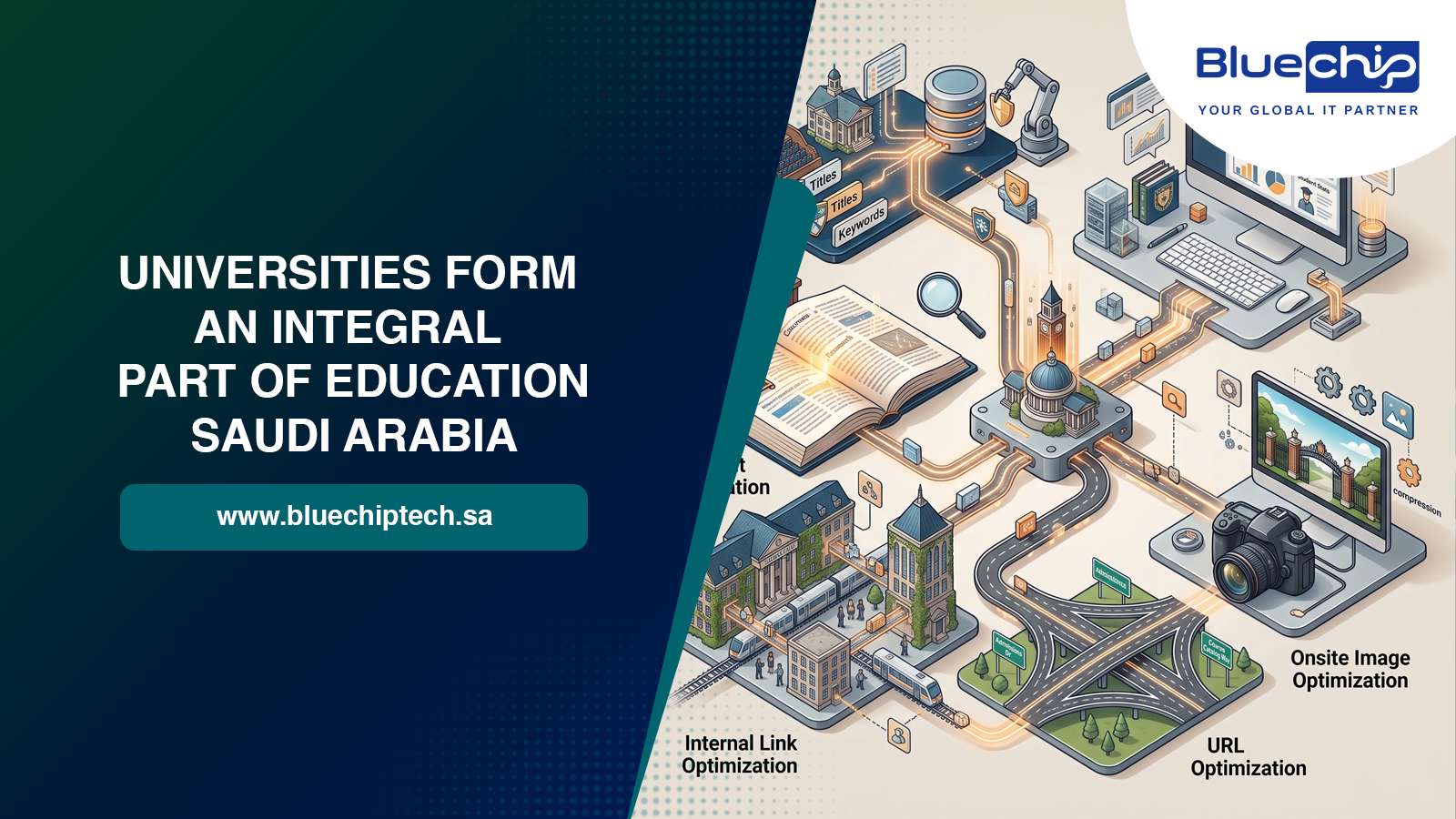
A logical hierarchy helps both people and crawlers understand academic relationships. A structure such as University > Faculty > Department > Program > Admissions creates context that flat or disconnected pages cannot. Breadcrumbs, contextual links, related-program modules and clear navigation can reduce crawl depth and prevent important program pages from becoming isolated.
Mobile Experience and Core Web Vitals
Prospective students frequently research universities from mobile devices, making performance part of the search and user experience. Core Web Vitals provide useful signals for identifying friction. Largest Contentful Paint (LCP) can suffer from oversized hero imagery, slow server response or render-blocking resources. Interaction to Next Paint (INP) can be affected by excessive JavaScript, third-party scripts and complex interactive components. Cumulative Layout Shift (CLS) can result from images without dimensions, late-loading fonts, banners or dynamic elements.
Practical work may include image compression, caching, script and font optimization, template improvements, CDN evaluation and mobile testing. These improvements support usability and technical quality; they should not be presented as a guarantee of rankings because search performance depends on many factors.
On-Page SEO for Programs, Faculties and Admissions
On-page optimization starts with assigning a clear search purpose to each URL. Program titles, title tags, headings, descriptions and body copy should use terminology prospective students understand while remaining academically accurate. URLs should be stable and descriptive, and image alt text should explain meaningful visuals rather than serve as a place to repeat keywords.
Admissions content deserves the same discipline. Requirements, deadlines and application instructions should be easy to find and kept current. When several pages cover the same topic, consolidation or clearer differentiation may be preferable to allowing them to compete. The objective is a coherent information system, not simply more indexed pages.
Structured Data for University Websites
Structured data can help search engines interpret entities and page relationships when it accurately represents visible content. Depending on the page, relevant types may include Organization, EducationalOrganization or CollegeOrUniversity, Course where appropriate, BreadcrumbList, Event for genuine events, and Article or NewsArticle for suitable editorial content. Implementation should be validated because themes, plugins or multiple systems can output overlapping markup. Schema can improve machine understanding, but it does not guarantee rich results or rankings.
Measuring University SEO Performance
Traffic alone is an incomplete KPI. A useful measurement framework can track visibility for priority programs, non-branded impressions and clicks, organic visits to program and admissions pages, indexed priority URLs, Core Web Vitals and meaningful actions such as enquiries or application-related interactions where analytics permits. Bilingual institutions can also compare Arabic and English performance to identify content or technical gaps.
Our University SEO Process
- University website and search-visibility review
- Technical SEO and indexation audit
- Program, faculty and admissions content inventory
- Saudi and Riyadh search-intent research
- Arabic and English keyword planning where required Website architecture and internal-link review
- Technical fixes and on-page optimization
- Structured-data and performance review
- Monitoring through relevant search and conversion KPIs
Why Work With Bluechip Advanced Technologies?
Bluechip Advanced Technologies approaches higher education SEO as a combination of technical quality, search-intent planning and usable content architecture. For Saudi institutions, that means considering Riyadh and national search demand, Arabic and English journeys, program discovery, admissions pathways and the technical complexity of a large website together rather than treating them as separate projects.
Frequently Asked Questions
What does SEO for universities include?
University SEO can include technical audits, program and admissions keyword mapping, on-page optimization, site architecture, internal linking, bilingual SEO, structured data, performance work and measurement. The exact scope should depend on the institution’s website, recruitment priorities and current search issues.
How can SEO improve university program discovery?
SEO can make program pages easier to find by aligning page structure and terminology with relevant search intent, improving internal links, resolving indexation problems and connecting programs clearly to faculties, departments and admissions information. The aim is to help qualified prospective students reach the right academic page.
Do Saudi universities need separate Arabic and English SEO strategies?
Often, yes. Arabic and English audiences can use different terminology and search patterns. Separate research, localized metadata and carefully connected language versions can provide better coverage than literal translation. Hreflang, canonicals and internal linking also need to be configured correctly.
How should university program pages be optimized?
Each program page should have a clear purpose, accurate program information, logical headings, descriptive metadata, relevant internal links and an obvious path to admissions or application information. Optimization should reflect the actual academic offering rather than adding keywords that do not match the program.
Strengthen Your University's Search Visibility in Saudi Arabia
If your institution needs stronger program discovery, better Arabic and English visibility, cleaner technical SEO or more useful admissions journeys, Bluechip Advanced Technologies can review the current website and identify priority opportunities. Request a Saudi SEO strategy consultation to assess the technical, content and search-intent improvements most relevant to your university and its audiences in Riyadh and across Saudi Arabia.


