




Why Saudi Startups Need Strong Cloud Security from Day One
Saudi Arabia is in the midst of a startup boom, fueled by the ambitious Vision 2030 and remarkable public investment. New corporations, particularly in Fintech, HealthTech, and e-commerce, are disrupting conventional markets, and almost all of them are constructed on one vital foundation – the cloud. The cloud security delivers the pace, adaptability, and flexibility that startups need to evolve quickly.
However, this speed usually tempts founders to view protection as an optional extra that they can worry about later. This mindset is a crucial error. In today’s threat landscape, failing to construct robust cyber security solutions in Saudi Arabia posture from the moment your first server spins up can cause catastrophic results.
Table of Contents
The Startup Cloud Security Misconception – I’m Too Small to be Targeted
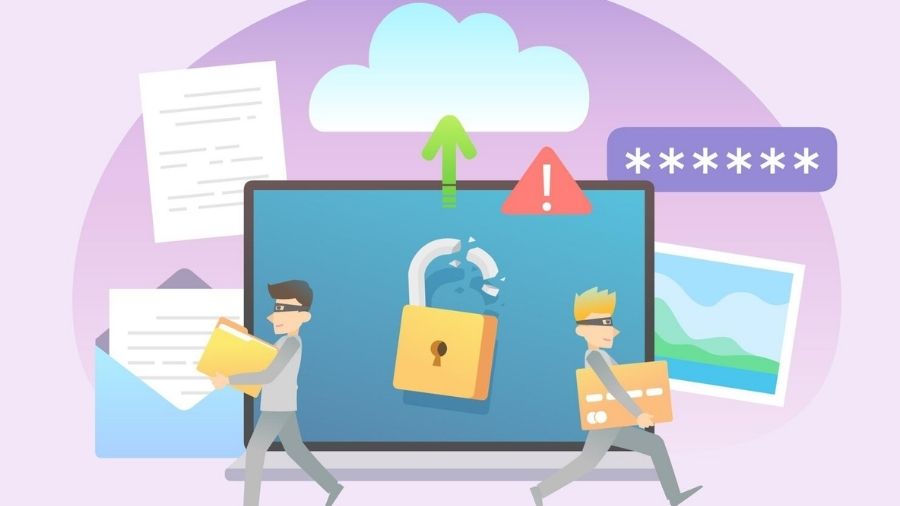
This is the riskiest myth in the startup world. Attackers don’t wait for Series B funding. They target vulnerability, not size.
1. Automated Attacks Target Weakness –
Cyberattacks today are hugely automated. Attackers utilize bots and scripts to scan the whole internet for typical weaknesses, like –
- Misconfigured Storage Buckets – Leaving cloud storage open to the public internet by mistake. This is the big reason for data breaches.
- Default Passwords – Utilizing easy or default credentials for cloud databases or developer accounts.
- Unpatched Software – Operating outdated versions of applications or containers that contain unpatched exposures.
If your startup’s public-facing cloud solutions in Saudi Arabia have one of these gaps, an automated attack can compromise your system within days of start.


2. Phishing for Credentials –
Startups usually operate with small, enthusiastic groups that depend on collaboration tools and email. This makes them ideal targets for phishing attacks, with the target set at stealing login credentials. Once a hacker has a main developer or founder’s cloud access, they have the keys to the whole kingdom, your code, your client information, and your intellectual property.
Cloud Security Regulatory Compliance – The National Cybersecurity Authority

Running a business in the Kingdom means complying with stringent national security norms established by the National Cybersecurity Authority. For startups, adherence is not a future objective; it is a recent demand.
NCA’s Essential Cybersecurity Controls and Cloud Security Controls –
The NCA establishes the baseline for cyber security solutions in Saudi Arabia. For any unit utilizing cloud services, the NCA has released cloud cybersecurity controls, which extend the demands of the Essential Cybersecurity Controls.
1. Mandatory for Key Sectors – While all companies are encouraged to follow the NCA controls, they are usually compulsory for startups managing Critical National Infrastructure data or running in regulated industries such as Finance or Healthcare.
2. Data Residency – Saudi rules usually have stringent rules on where data should be stored. If your startup is utilizing an international cloud provider, you should make sure your data is hosted in a domestic or sanctioned regional data hub and that your formation fulfills all governance demands.
3. The Cost of Non-Compliance – Fines for non-compliance are severe and can comprise huge penalties, loss of functional licenses, and compulsory system shutdowns. For a young startup, this is a death sentence. By executing protection from day one, you construct adherence into your system, sidestepping expensive and complicated retrofitting later.
The Shared Responsibility Model – You Are Accountable

A basic thought in cloud protection that several startups misunderstand is the shared responsibility model. When you utilize a prime cloud provider, they protect the cloud itself.
However, you are responsible for the security in the cloud.
1. Your Responsibilities Include –
- Data Security – Encrypting your sensitive data.
- Identity and Access Management – Controlling who can access your cloud resources and what they can do. This means utilizing Multi-Factor Authentication for everybody and enforcing the principle of least privilege.
- Network Configuration – Establishing your virtual firewalls, network segmentation, and protection groups appropriately to isolate your growth, staging, and production environments.
- Patching and Vulnerability Management – Making sure the running systems and applications you install on your cloud servers are constantly updated.
Ignoring this model means you are running under the wrong assumption that your cloud provider is doing all the work, leaving huge, effortlessly exploitable protection holes.
The Investor and Partner Barrier – Trust is the New Currency

In the extremely competitive Saudi startup ecosystem, protecting funding and landing key collaborations requires showing credibility and trust.
1. Investor Due Diligence –
Venture Capital companies, both local and global, are extremely prioritizing cybersecurity during their due diligence procedure. A badly protected startup represents an existential danger to their investment. They will ask questions like –
- Do you have an incident response plan?
- Are you adherent to NCA ECC/CC?
- Do you use managed security services Saudi Arabia?
A transparent, forceful answer shows maturity and decreases perceived risk, making your startup a much more appealing investment target.
2. Enterprise Partnerships –
If your startup plans to connect with a big Saudi bank, an oil and gas company, or a government unit, they will conduct an extensive protection evaluation on your environment. If you fail their audit, you will lose the contract, no matter how inventive your product is. Initiating protected means you are enterprise-ready from the start.
The Long-Term Cost of Delaying Cloud Security

Several founders assume they can save money by delaying protection investment.
In reality, the opposite is true.
A. The Exponential Cost of Retrofitting –
Trying to bolt on security standards to a live, complicated application later is enormously time-consuming and costly.
You have to –
1. Stop Development – Divert developers and engineers away from building new features.
2. Unravel Complexity – Dig through thousands of lines of code and configuration to solve errors made months ago.
Initiating with a protected foundation is far affordable and quicker than solving a breach or re-engineering an insecure product.
B. The Cost of a Breach –
A single data breach can lead to –
1. Financial Loss – Penalties, litigation costs, forensic investigation expenses, and compulsory client notification.
2. Reputational Damage – Losing client trust and potential collaborations, which is extremely tough for a young brand to recover from.
3. Total Failure – Several small companies never recover from a prime cyberattack.
Your Immediate Strategy – Leveraging Managed Security Services in Saudi Arabia
So, how can a small Saudi company with a limited budget and no in-house protection professional secure its complicated cloud based solutions in Saudi Arabia from day one? The answer is to partner with specialized managed security services providers.
Why MSSPs are the Startup’s Best Friend

1. Instant Expertise – You immediately achieve access to a group of certified protection engineers who have expertise in cloud platforms and, critically, NCA adherence. They understand the particular cyber security solutions in Saudi Arabia needed to run legally and protectively.
2. 24/7 Monitoring and Response – Attackers work around the clock. MSSPs deliver non-stop supervision of your cloud environment through a Security Operations Center. They find threats, research them, and respond within minutes, drastically decreasing the window of opportunity for an attacker.
3. Cost Efficiency – Appointing a single, high-level cybersecurity expert in KSA costs hundreds of thousands per year. An MSSP permits you to convert that huge capital cost into a predictable, manageable functional expense, providing you with a complete protection team for a fraction of the cost.
4. Focus on Growth – By outsourcing your regular protection management, like patching, configuration reviews, and threat hunting, to a provider of managed services in Saudi Arabia, your founders and developers are free to concentrate 100% on inventing and scaling your product.
Key Security Action Items to Implement from Day One –
1. IAM Foundation – Allow Multi-factor authentication for each employee, service account, and cloud console login. Execute the Principle of Least Privilege.
2. Data Protection – Allow encryption for all data storage services and utilize HTTPS/TLS encryption for all traffic.
3. Misconfiguration Checks – Execute cloud security posture management tools that constantly scan your cloud formation for errors that violate NCA rules or industry best practices.
4. Logging and Auditing – Turn on thorough logging for all cloud activity and funnel those logs to a central place for research. This is non-negotiable for forensic investigation and NCA adherence.
By treating protection as a core feature of your product instead of a footnote, Saudi startups can move quickly, entice investment, and make the faith needed to succeed in the Kingdom’s quickly accelerating technical economy. Begin protected, develop resilient.
Also Read: Top Cyber Threats Targeting Saudi Companies This Year


