



VAPT Explained – Vulnerability Assessment and Penetration Testing
In the quickly growing technical landscape of Saudi Arabia, where main projects, such as Vision 2030, are driving huge technological change, cybersecurity is paramount. For any company, from big companies to small businesses, the question isn’t if they will be targeted by cyber threats, but when.
This is why services such as Vulnerability Assessment and Penetration Testing have become crucial, building the spine of a forceful cybersecurity solution in Saudi Arabia.
VAPT explained is a dual-process methodology that assists companies in finding weaknesses in their systems and verifying if those weaknesses can actually be exploited by a real attacker. It is a crucial element of IT solutions in Saudi Arabia, permitting companies to solve their security gaps prior to a malicious hacker finding and exploiting them.
Table of Contents
Vulnerability Assessment
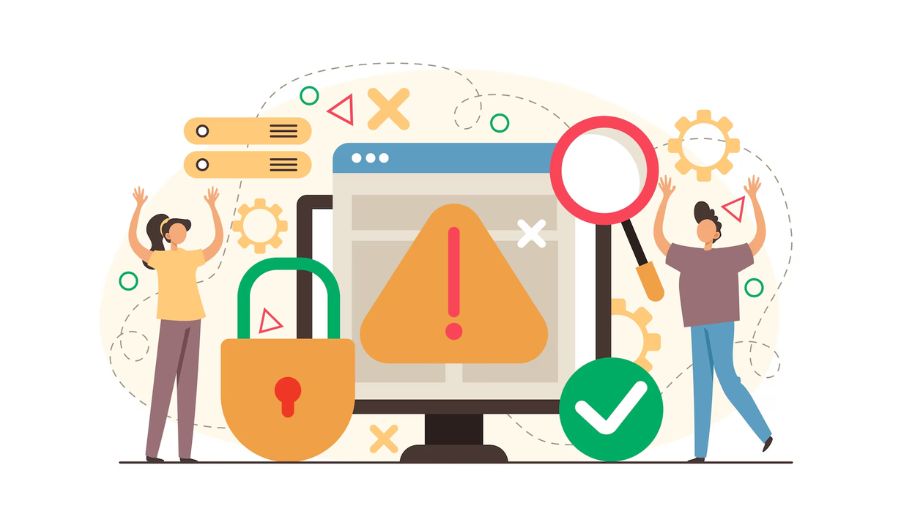
The first move in VAPT testing is the vulnerability assessment. Consider this a digital health check-up. It is a systematic review of protection weaknesses in an information system. It utilizes automated tools to scan your networks, applications, and systems for renowned protection flaws.
1. Goal – To locate as many protection weaknesses as possible and deliver a broad.
2. Methodology – Majorly utilizes automated vulnerability scanners to look for –
- Outdated software and missing patches.
- Weak passwords and default configurations.
- Misconfigurations in firewalls or servers.
- Renowned security problems in applications.
3. Result – A thorough report listing every recognized vulnerability, usually prioritized by severity depending on the potential risk.


Types of Vulnerability Assessment
Vulnerability assessment is generally performed on all digital assets –
| Assessment Type | What is Scanned? | Goal |
| Network vulnerability assessment | Servers, firewalls, routers, and network devices. | Identify open ports, insecure protocols, and network-level weaknesses. |
| Application vulnerability testing | Web applications, APIs, and mobile apps. | Identify flaws like SQL Injection, Cross-Site Scripting (XSS), and insecure data handling (often based on the OWASP Top 10 list). |
| Database Assessment | Database servers and configurations. | Check for weak credentials, excessive user privileges, and unencrypted sensitive data. |
Penetration Testing

The second phase, network penetration testing, goes beyond easy scanning. It moves from passively locating flaws to actively trying to exploit them. This is where the ethical hacker works like a true cybercriminal.
Penetrating testing is a simulated cyberattack against your systems to examine for exploitable vulnerabilities. It is an authorized attempt to achieve unauthorized access to an asset.
1. Goal – To prove that a vulnerability is exploitable, comprehend how profound an attacker can get into your network, and measure the real-world effect of a successful breach.
2. Methodology – An extremely proficient ethical hacker utilizes both automated tools and, crucially, creative problem-solving to chain together several low-risk flaws into a high-risk attack path.
3. Result – A clear, evidence-backed report that presents precisely how a system was compromised, what data was accessed, and the moves taken to gain access to the breach. This shows the actual business risk.
Types of Penetration Testing
Penetration tests are classified depending on the information given to the tester –
| Testing Type | Tester’s Knowledge of the System | Simulation Type |
| Black Box Testing | Zero knowledge (like a public hacker). | Simulates an external attacker trying to breach the defenses from the outside. |
| Grey Box Testing | Partial knowledge (like an employee or partner). | Simulates a disgruntled insider or a hacker who has already gained basic user access. |
| White Box Testing | Full knowledge (source code, architecture diagrams). | Provides maximum coverage; the tester can perform comprehensive code reviews and internal tests. |
VAPT – The Power of the Combined Approach
The real value lies in merging the two ways into VAPT explained –
- VA Provides the Scope – It recognizes the wide range of vulnerabilities.
- PT Provides the Evidence – It concentrates on the crucial flaws and proves their exploitability and effect.
This blend provides companies with a complete, prioritized action plan. Rather than wading through hundreds of low-priority scan notifications, the protection group can concentrate its restricted time and resources on solving the vulnerabilities that a real attacker could utilize right now.
The VAPT Mandate in Saudi Arabia
In Saudi Arabia, the drive for technical superiority makes VAPT not only a protection best practice, but a regulatory and strategic need.
An organization delivering cyber security solution in KSA recognizes this requirement –
1. Regulatory Compliance – Several Saudi Arabia units, particularly those in finance, government, and crucial infrastructure, should adhere to the structure mandated by the National Cybersecurity Authority. Routine, documented VAPT testing is usually a prerequisite for fulfilling these norms and showing due diligence.
2. Protecting Vision 2030 Projects – As the Kingdom invests heavily in technical services, smart cities, and e-government outlets, the requirement to secure this infrastructure evolves. VAPT makes sure that the basic systems supporting these initiatives are resilient against state-sponsored attacks and international cyber threats.
3. Mitigating Risk Proactively – By using managed security services Saudi Arabia, companies are adopting a forceful stance. VAPT moves protection from a reactive model to a predictive model. This assists in sustaining business continuity and securing the company’s standing and client trust.
The VAPT Process – A Step-by-Step Guide
Whether you’re involving an external provider for cyber security solution in Saudi Arabia or operating an in-house assessment, the VAPT procedure generally follows these phases –
1. Planning and Scoping – Then, the most vital phase. The customer and the VAPT provider describe the purpose, the assets to be tested, the testing strategies, and the timeline. Clear borders and regulations of involvement are prepared to control disruptions.
2. Information Gathering – The tester collects publicly available details about the target, like domain names, IP addresses, employee data, and application information, simulating how an attacker would prepare.
3. Vulnerability Scanning – Automated tools scan the scoped assets to recognize and catalog all renowned vulnerabilities, producing a long list of possible weaknesses.
4. Exploitation and Post-Exploitation – The ethical hacker manually examines and attempts to exploit the difficult vulnerabilities. If successful, they see how far they can get.
5. Reporting and Remediation – A thorough, actionable report is delivered. It generally includes –
- An executive summary for management.
- A technical industry for IT groups.
6. Retesting – After the client’s IT team applies the patches and solves, a retest is performed to verify that the exposures have been completely closed and that the remediation efforts didn’t introduce any new weaknesses.
Conclusion
VAPT is far more than an easy adherence checklist it is a crucial investment in the resilience and longevity of any business operating in the vibrant Saudi Arabian market. By merging the broad-ranging detection of Vulnerability Assessment with the real-world validation of penetration testing, companies gain the transparency and actionable intelligence required to manage cyber risks effectively.
Partnering with trusted managed IT services providers in Saudi Arabia, such as Bluechip Tech, ensures that this critical security standard is implemented professionally, ethically, and in alignment with international best practices enabling organizations to operate, grow, and innovate with confidence in a secure digital environment.
Also Read: Cloud Network & AI Security – Protecting KSA Businesses


